Home › Industrial and Heavy-Duty Asphalt Paving
Get pavement that stands up to heavy loads with industrial asphalt paving in Fort Wayne, IN. We design and build thick section asphalt for truck yards, loading docks, and warehousing areas, focusing on subgrade strength and long term performance under traffic.
Precision Asphalt Fort Wayne provides professional industrial asphalt paving throughout Fort Wayne, IN, Indiana and the surrounding area. Our licensed, insured crew delivers safe, clean, on-time work with a free estimate before anything begins. Call (260) 408-6873 or request your free quote.
Industrial Asphalt Paving for Fort Wayne’s Hard-Working Sites
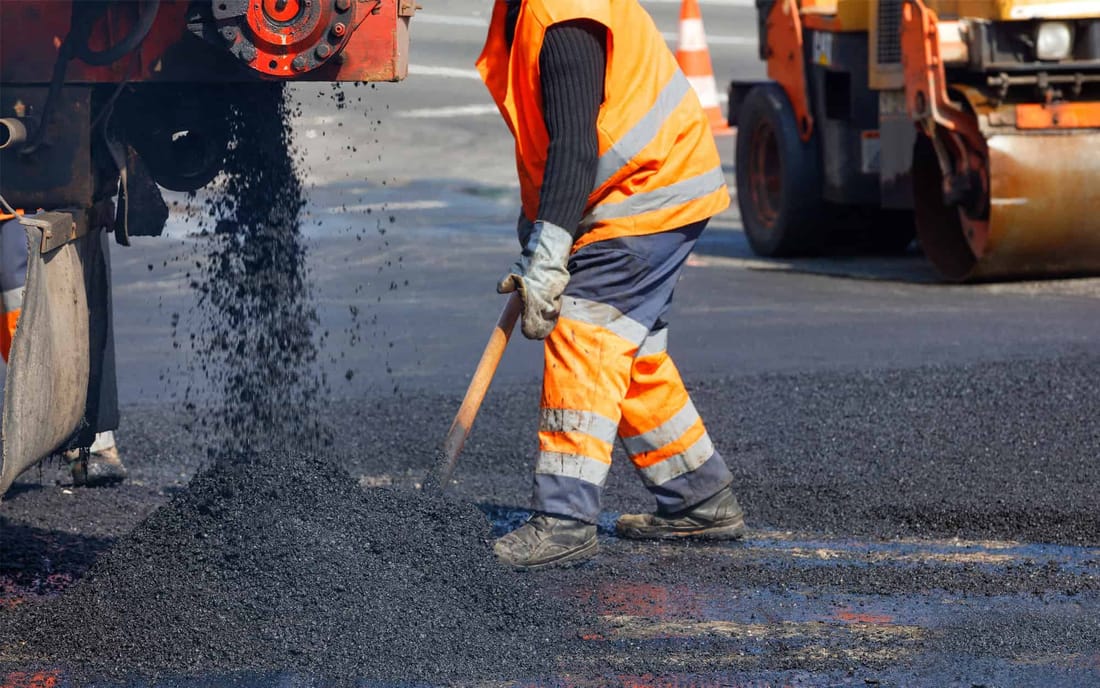
Industrial and heavy-duty asphalt paving has to do more than look good. It has to stand up to forklifts, semi traffic, loaders, and daily turning and braking without rutting or breaking apart. At Precision Asphalt Fort Wayne, we design each industrial pavement around the loads, fuel exposure, and traffic patterns on your site, not a one-size-fits-all “parking lot” template.
We work with manufacturers, distribution centers, trucking companies, utilities, and contractors across Fort Wayne and northeast Indiana. Whether you are planning a new facility on the outskirts of town or reinforcing an older loading dock in the city, we evaluate your subgrade soils, base thickness, and asphalt mix design so the pavement structure matches the demands of your operation.
From heavy tractor-trailer lanes near I-69 to forklift aisles in cold storage warehouses, our team is familiar with the specific problems that show up in this area: freeze-thaw cycles, saturated clay soils, and rutting in unreinforced truck lanes. We focus on building pavements that resist those issues from the start instead of just patching them later.
How We Design Heavy-Duty Pavements That Actually Hold Up
The most important part of industrial asphalt paving happens before the first load of asphalt arrives. Precision Asphalt Fort Wayne begins every heavy-duty project with a site assessment. We look at soil type, drainage patterns, existing base material, and how your trucks and equipment actually move through the property. We often walk the truck routes with your operations or safety manager so we understand turning movements, pinch points, and high stress areas.
Based on that information, we design a pavement structure with specific thicknesses for subbase, base, and asphalt layers. For example, a concrete or asphalt recycling yard that runs loaded tri-axle dumps all day may need 10 to 12 inches of compacted aggregate base and multiple asphalt lifts, while a light industrial warehouse with occasional tractor-trailer deliveries might perform well with 6 to 8 inches of base and a thinner asphalt section.
We also adjust pavement design around Fort Wayne’s climate. Our freeze-thaw cycles and occasional deep frost mean frost heave and pumping can destroy a pavement that looks strong on paper. To address that, we incorporate proper cross-slope, underdrain systems where needed, and carefully compact the subgrade so water has somewhere to go and does not stay trapped under your heavy pavement structure.
Step-by-Step: Our Industrial Asphalt Paving Process
Precision Asphalt Fort Wayne follows a clear, repeatable process on every industrial and heavy-duty asphalt paving project so you know what is happening on site and why.
1. Site evaluation and layout: We verify grades, check access for your trucks during construction, and map out critical operational areas such as loading docks, fuel stations, dumpster pads, and truck scales. We coordinate phasing so your facility can usually stay open with controlled traffic.
2. Demolition and subgrade preparation: For rebuilds, we remove failed asphalt or concrete, then evaluate the subgrade soil. In many Fort Wayne sites we encounter soft clay pockets. We undercut those areas, replace them with compacted stone, and in very weak areas may recommend geotextile or geogrid reinforcement to prevent long term settlement and rutting.
3. Aggregate base installation: We place and compact layers of INDOT-approved aggregate (commonly No. 53 stone) in controlled lifts. Proper compaction is verified as we go, not guessed at later. Heavy-duty truck lanes and dock areas typically receive additional base thickness compared to regular parking stalls.
4. Asphalt placement in multiple lifts: For industrial pavements, we rarely install all asphalt thickness in a single lift. Instead, we place and compact a base course and one or more surface or intermediate courses. This approach creates a denser, stronger structure that handles heavy axle loads better and resists shear at tight turning points.
5. Joint sealing, transitions, and striping: We pay close attention to tie-ins at dock aprons, concrete pads, and existing pavements. Clean transitions reduce impact loading on your pavement and on your forklifts. Once the surface has cooled, we install striping, truck lane markings, and any specialty stencils such as trailer numbers, dock numbers, or pedestrian pathways.
6. Final walkthrough and maintenance plan: Before we leave, we walk the site with you, confirm drainage and access work as intended, and provide guidance on early use, snow plow blade settings, and long term maintenance like crack sealing and sealcoating where appropriate.
Material and Design Options for Heavy-Duty Use
Industrial asphalt paving is not a single product. It is a combination of materials and design choices that can be adjusted to your site and budget. Precision Asphalt Fort Wayne will explain these options in plain terms so you can make informed decisions.
Heavy-duty mix designs: For truck lanes, loading docks, and high stress corners, we often recommend a mix with a higher stone content and modified binder that resists rutting. These mixes hold up better under slow, heavy turning movements from lift trucks and yard tractors.
Reinforced sections and hybrid designs: Many Fort Wayne facilities choose a hybrid pavement where the heaviest areas use reinforced concrete pads at dock doors, trash compactors, or fuel islands, surrounded by heavy-duty asphalt lanes. We coordinate the interface between materials so water does not infiltrate at the joints.
Drainage and slope: Industrial pavements fail early when water sits on the surface or along the edges. We specify cross-slopes that move water to inlets without creating problems for forklifts or loading operations. In some low-lying Fort Wayne sites, we install underdrains along the edges of heavy truck lanes to keep the base drier and more stable.
Surface texture and safety: For yards that operate in winter or deal with wet or oily conditions, we can adjust mix selection and surface texture to provide better traction, especially in areas where workers are on foot around equipment.
What Affects Cost on Industrial Asphalt Paving Projects
Understanding what drives cost can help you plan and avoid surprises. Precision Asphalt Fort Wayne provides detailed, line item proposals so you see exactly where your investment is going.
Subgrade condition: Stable soils reduce cost. Soft, wet, or organic soils require undercutting, fabric, or additional stone. Many Fort Wayne industrial sites sit on fill material that was placed decades ago. If we find unsuitable pockets, we will show them to you and explain the options before proceeding.
Required pavement thickness and area: Heavier truck traffic and higher axle loads mean more base and asphalt thickness. A truck terminal with constant 80,000 pound loads will require a thicker section than a light manufacturing plant with occasional deliveries, even if the square footage is similar.
Drainage and underground work: Adding or adjusting catch basins, underdrains, or storm piping adds cost but can dramatically extend pavement life. In older industrial parks, existing drainage is often undersized or partially collapsed. Addressing those issues during paving prevents premature failure and repeated patching later.
Access and phasing: Keeping your operation running during construction sometimes requires night work, phased closures, temporary stone access, or flagging. We will work with you to find the balance between operational convenience and project cost so you have clear expectations before we start.
Material choices and add-ons: Heavy-duty mixes, reinforced areas, thicker base stone, and specialty striping or markings all affect price. We are straightforward about which items are optional and which are necessary for performance so you can prioritize.
Choosing Precision Asphalt Fort Wayne for Heavy-Duty Work
Industrial and heavy-duty asphalt paving is not the place to cut corners or use a residential-style approach. A pavement that looks fine on day one can start raveling, rutting, or breaking at dock doors within a couple of winters if the base, mix, and drainage are not right. Precision Asphalt Fort Wayne focuses on building surfaces that survive real-world use at distribution centers, plants, and yards throughout Fort Wayne and the surrounding communities.
When you contact us, we start by asking about your specific operation: truck counts, axle loads, turning movements, yard equipment, and any trouble spots in your existing pavement. We then inspect the site in person and provide a written plan that covers scope, phasing, and long term maintenance recommendations. Our crews are used to working around active facilities, coordinating with safety teams, and respecting restricted areas.
If you are planning a new industrial site, expanding an existing facility, or tired of constant patching in your truck lanes, we can help you evaluate whether a full reconstruction, structural overlay, or targeted reinforcement gives you the best return. Our goal is to deliver an industrial asphalt paving solution that holds up in Fort Wayne’s climate and under your specific loads, so you can focus on running your business instead of managing pavement failures.