Home › Asphalt Pathways, Sidewalks, and Trails
Connect your site with safe routes using asphalt pathway paving in Fort Wayne, IN. We build smooth sidewalks, bike paths, and multi use trails for parks, schools, and commercial campuses, with gentle grades and consistent, walkable surfaces.
Precision Asphalt Fort Wayne provides professional asphalt pathway paving throughout Fort Wayne, IN, Indiana and the surrounding area. Our licensed, insured crew delivers safe, clean, on-time work with a free estimate before anything begins. Call (260) 408-6873 or request your free quote.
Asphalt Pathways, Sidewalks, and Trails in Fort Wayne
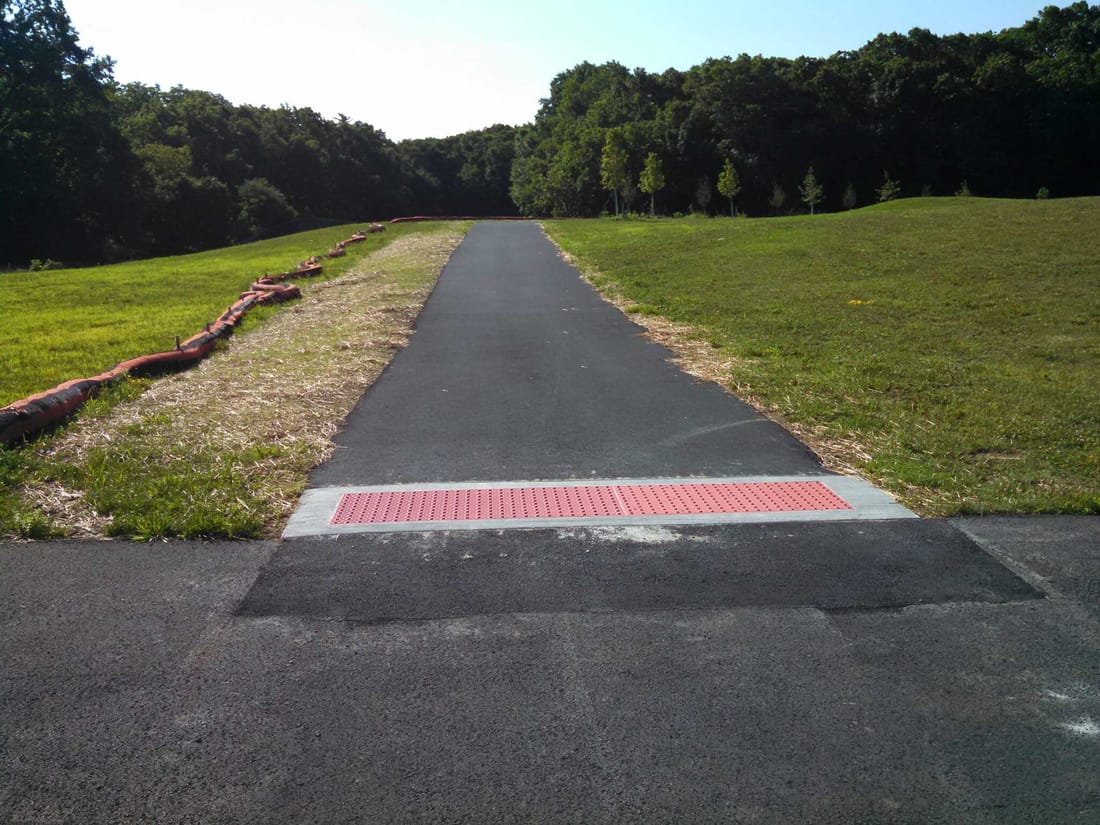
Asphalt pathways, sidewalks, and multi‑use trails require different planning standards than driveways or parking lots. At Precision Asphalt Fort Wayne, we design and build paved walking and biking surfaces that match how people actually use them in neighborhoods, parks, campuses, and commercial properties across Fort Wayne and the surrounding Allen County area.
We look first at how the pathway will be used. A narrow residential sidewalk that only sees foot traffic can be built differently than a 10‑foot multi‑use trail that needs to carry bikes, maintenance carts, and occasional emergency vehicles. By matching the pavement structure to the real‑world loading, we keep your project cost‑effective without sacrificing durability.
Fort Wayne’s freeze‑thaw cycles, lake‑effect moisture, and clay soils make pathway design more challenging than in warmer climates. Our team accounts for these local conditions in the base design, drainage layout, and asphalt mix selection so your paths stay smooth and safe instead of buckling, ponding water, or crumbling at the edges.
Site evaluation, layout, and grading
Every asphalt pathway project starts with a site walk. We review existing grades, soil conditions, tree lines, utilities, and how pedestrians already move through the space. For park trails and campus walkways, we often follow worn footpaths because they reveal natural desire lines that reduce future cut‑through traffic.
We then establish the layout with attention to ADA accessibility, sight lines, and how snow will be plowed. For Fort Wayne properties, we typically design cross slopes of 1.5 to 2 percent so water sheds off the path, but is still comfortable for walkers and wheelchairs. Long runs get gentle vertical curves instead of abrupt breaks that can trap water or trip users.
Grading is critical in our local climate. Clay and silty soils common in northeast Indiana hold water, which leads to frost heave if not handled correctly. Precision Asphalt Fort Wayne specifies subgrade shaping and compaction to firm, uniform support. In lower areas we may over‑excavate and add a thicker aggregate base or underdrain to keep the pavement structure dry and stable through winter.
Base construction and asphalt paving process
A pathway is only as good as its base. After stripping sod and organic material, we place compacted aggregate, usually an Indiana #53 crushed stone, to a depth that matches expected use. Light‑use residential sidewalks may use 4 inches of compacted base, while multi‑use trails or serviceable fire access routes often receive 6 inches or more.
We compact the base in thin lifts with plate compactors or small rollers sized for pathway widths. On curving or narrow trails where large equipment will not fit, our crews use specialty compactors and hand finishing to achieve uniform density right up to the edges.
For the asphalt surface, typical thickness ranges from 2 to 3 inches in one or two lifts, depending on traffic and budget. For neighborhood walkways we usually install a single 2‑inch surface lift. For trails that will see carts or service vehicles we often place a 1.5‑inch binder lift and a 1.5‑inch surface lift to better resist bending and cracking. The asphalt is machine placed where possible for smoothness, with handwork used around curves, intersections, and tie‑ins.
Material options, thicknesses, and design choices
Not every asphalt pathway needs the same mix or thickness. Precision Asphalt Fort Wayne helps you choose a pavement structure tailored to your project rather than forcing a one‑size‑fits‑all spec.
We typically use a fine‑graded surface mix for pathways and sidewalks. The smaller aggregate size provides a smoother walking and biking surface and reduces trip hazards. Where bicycle traffic is high, we may recommend an even finer mix for a more comfortable ride. In shaded or damp areas, we can modify the surface texture slightly to improve traction without making the path rough.
Thickness is driven by expected loading and subgrade quality. A backyard patio path on well‑drained soil can perform well with a modest base and 2 inches of asphalt. A greenway trail built over soft soils or in a flood‑prone area needs additional base depth and possibly a thicker asphalt cross‑section. For commercial campuses and schools, we often design for occasional service and emergency vehicle traffic and increase structural capacity accordingly.
Edge support is another key design choice. Paths that meet lawns can be built with compacted shoulders that allow easy mowing. Areas with heavy foot traffic at the edges, such as around playgrounds or transit stops, may benefit from concrete edge restraints or integrated curb to reduce edge cracking and raveling.
Drainage, seasonal timing, and local considerations
Most premature pathway failures in Fort Wayne come back to drainage problems. Water that sits on or under the pavement magnifies freeze‑thaw damage and accelerates ruts and potholes. For each project, we design positive drainage so water moves off the path into swales, drains, or adjacent turf instead of pooling in low spots.
On longer trails, we may incorporate shallow swales, culverts, or underdrains where the path crosses low points or known wet areas. In wooded or park environments we place particular emphasis on how runoff will affect nearby trees and natural areas, balancing root protection with pavement longevity.
Timing matters in northeast Indiana. The best window for asphalt pathway paving is typically April through early November, when night temperatures stay consistently above 40 degrees and daytime highs allow proper compaction and bonding. Early spring and late fall work may require schedule flexibility to avoid cold, wet days. For heavily shaded sites that stay damp, we often recommend late spring or early summer installation so the subgrade and aggregate base can dry thoroughly before paving.
If your project is tied to school calendars, park events, or business operations, we coordinate phasing and access plans so construction disrupts users as little as possible, while still respecting weather and temperature limits that affect quality.
Cost factors and common problems we solve
Pathway and sidewalk projects vary widely in cost, and understanding the drivers helps you plan a realistic budget. The main factors are total square footage, required base depth, access for equipment, thickness and number of asphalt lifts, and any drainage or demolition work needed.
Curved layouts, tight quarters between buildings, or heavily landscaped areas can increase labor because our crews must use smaller equipment and more handwork. Existing concrete or failing asphalt removal also adds cost, but it allows us to rebuild a proper base instead of simply overlaying problems that will reflect through.
Common issues we address in Fort Wayne include trip hazards from tree roots, settled concrete slabs, and deteriorated cinder or gravel paths. For root‑related heaving, we work with you to balance tree preservation with user safety, sometimes adjusting alignment or thickening the pavement structure over root zones. For old concrete sidewalks, we often remove the slabs, regrade, and replace with continuous asphalt to eliminate joints where heaving and tripping tend to occur.
We are candid about when a simple overlay is appropriate and when full reconstruction is the better long‑term value. If the existing base is stable and drainage is acceptable, a carefully prepared overlay can extend the life of an older path at lower cost. If the subgrade is soft or chronically wet, we recommend rebuilding from the base up so you are not paying twice for a short‑lived repair.
Maintenance, lifespan, and what to expect from Precision Asphalt Fort Wayne
A properly built asphalt pathway in Fort Wayne can provide 15 to 25 years of service with basic maintenance. Within the first year, hairline surface cracks from normal thermal movement are not unusual, especially where paths transition to rigid concrete or structures. We recommend routine crack sealing starting in year 3 to 5 to keep water out of the base and extend service life.
For larger trail and sidewalk networks, we can help you implement a pavement management plan. This may include periodic condition assessments, spot patching of localized failures, and scheduled sealcoating where appropriate. While sealcoating is not mandatory, many property owners use it to improve appearance and slow oxidation on heavily used paths.
When you work with Precision Asphalt Fort Wayne, you can expect clear communication about schedule, access, and what users should avoid during curing. Most pathways can be opened to foot traffic within 24 hours and to light service carts after 48 to 72 hours, depending on temperature. We provide specific guidance for your project so your staff or residents know how to care for the new surface during the critical first week.
Our crews are experienced in working around active schools, apartment communities, medical facilities, and public parks. We stage work to maintain safe pedestrian routes, use clear barricades and signage, and leave the site clean at the end of each day so your property never feels like a long‑term construction zone.